

How to Decorate Your Room with Gothic Décor: Expert Tips
A gothic room can feel dramatic without feeling gloomy. The secret is contrast, not covering every surface in black. If you’re wondering how to decorate your room with gothic décor, start by considering natural light, room size and everyday comfort before choosing dark walls or heavy furniture. A few deliberate choices can create atmosphere without making your space feel smaller or cluttered.
Begin with a palette, then layer in tactile details such as velvet, lace or dark wood. Use adjustable lighting to shape the mood and give statement pieces room to stand out. This guide walks you through practical choices for colour, texture and focal points, including personal touches such as framed art and collectibles. The result can feel curated, comfortable and unmistakably yours.
Key Takeaways
- How to decorate your room with gothic décor depends on the room you have: consider its dimensions, daylight, existing furniture and daily routines.
- Compare a statement wall with smaller accents or a curated display before deciding how boldly to commit.
- Build a palette from dark foundations, muted tones or selective colour accents to suit your space.
- Choose one focal point, then edit surrounding details so the room feels intentional rather than crowded.
- Make the atmosphere personal with framed art or selected collectibles that reflect your interests.
How to Decorate Your Room with Gothic Décor: Start with the Mood
Gothic décor has presence. It can make a bedroom feel cocooning, a reading corner feel mysterious or a living space feel distinctly individual. But dramatic doesn’t have to mean gloomy, and atmospheric doesn’t have to mean impractical. Start by choosing a mood that suits both the room and the way you use it.
Gothic décor is an adaptable style that combines dark or richly toned colours, expressive details and layered atmosphere to create a dramatic, personal room.
That’s the key to how to decorate your room with gothic décor: create a visual story rather than covering every surface in black or filling shelves with themed objects. Aim for cohesion, not a set. Choose a few elements that work together, then leave enough breathing space for the room to feel comfortable.
What makes a room feel gothic?
Colour sets the tone, while shadow, tactile surfaces and distinctive focal points add depth. Picture a deep-coloured wall beside warm wood, soft fabric and a sculptural mirror. Gothic Revival architecture offers historical inspiration, including pointed arches and decorative patterns. The Gothic Revival movement is a useful reference, not a decorating rulebook. Victorian design offers another cue through ornate details and a layered feel.
You can borrow these influences lightly. A modern room might pair clean lines with one dramatic accent; a romantic version could lean on flowing fabric and rich colour. Go bolder if that suits you, but choose details with intention. The result should feel like your room, not a collection of clichés.
Choose a gothic mood that fits your room
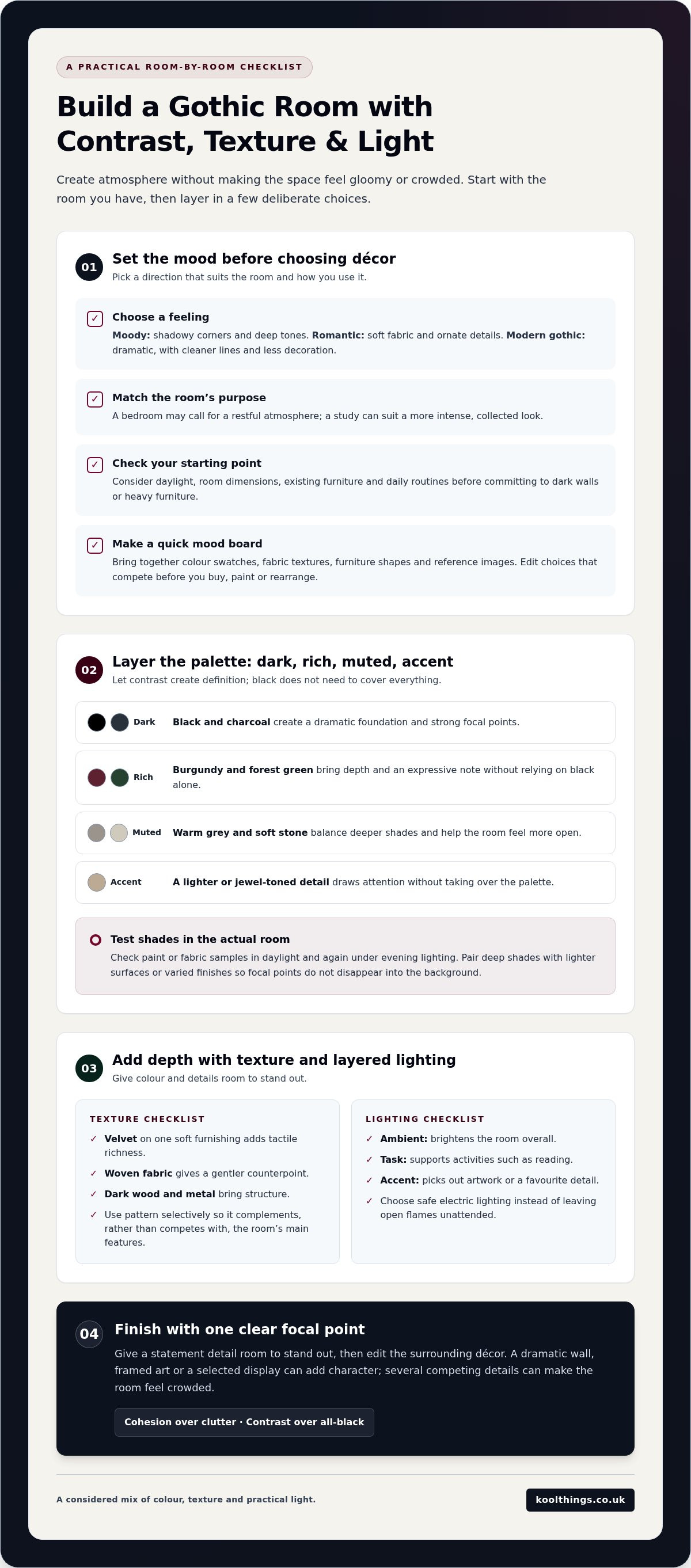
Before choosing paint or décor, decide how you want the room to feel. Moody might mean shadowy corners and deep tones. Romantic could suggest soft fabric and ornate details. Modern gothic keeps the drama but pares back decoration for a cleaner look. The room’s purpose matters too: a bedroom may call for a restful atmosphere, while a study can suit a more intense, collected look.
Check the daylight and existing furniture before settling on a direction. A room with limited natural light may work better with a lighter base and dark accents, while a bright space can take deeper colour without losing its sense of openness. Make a quick mood board before you commit, using colour swatches, fabric textures, furniture shapes and reference images. Then ask:
- Does this palette suit the room’s natural light?
- Do the details work with furniture you’re keeping?
- Does the mood fit how you use the space?
If the choices feel connected on the board, you have a strong starting point. If they compete, edit before you buy, paint or rearrange. A little planning now helps the finished room feel considered rather than cluttered.
Choose Gothic Colours, Textures and Lighting Without Overwhelming the Room
Black can set a striking tone, but it doesn’t need to cover every wall, furnishing or accessory. A gothic scheme feels more considered when you balance dark foundations with softer surfaces, lighter breaks and well-placed light. Choose the elements that suit your room and let contrast do the work.
Which colours work well in gothic room décor?
Start with the effect you want. Black and charcoal feel bold and dramatic; burgundy or forest green bring richness without relying on black alone. Muted neutrals, such as warm grey or soft stone, give the eye a quieter place to rest. Lighter trim, bedding or a restrained accent colour can also break up deep tones. For how to decorate your room with gothic décor, think in layers rather than choosing one all-over shade.
| Colour group | Examples | Visual effect |
|---|---|---|
| Dark | Black, charcoal | Creates a dramatic foundation and strong focal points |
| Rich | Burgundy, forest green | Adds depth and a more expressive note |
| Muted | Warm grey, soft stone | Balances darker shades and helps the room feel more open |
| Accent | A lighter or jewel-toned detail | Draws attention without taking over the palette |
Contrast gives dark décor definition: pair deep shades with lighter surfaces or varied finishes so focal points don’t disappear into the background. Test paint or fabric samples in the room itself. Check them in daylight and again under evening lighting, because the same shade can look different as the light changes.
How do lighting and texture shape the atmosphere?
Texture adds depth where colour alone can feel flat. Try velvet on one soft furnishing, woven fabric as a gentler counterpoint, or dark wood and metal details for structure. Pattern can add energy too, but use it selectively so it complements rather than competes with the room’s main features. For inspiration, browse these modern gothic bedroom ideas and notice how different finishes affect the overall look.
Layer lighting for atmosphere and everyday use. Ambient light brightens the room overall, task lighting supports activities such as reading, and accent lighting picks out artwork or a favourite detail. Choose safe electric lighting instead of leaving open flames unattended. A well-placed lamp can soften a dark corner while keeping the room practical. For a personal finishing touch, framed prints can bring your interests into the space.
Compare Gothic Décor Elements to Find the Right Balance
A dark wall, a carefully chosen print and a curated display can all create gothic character, but each has a different impact and level of commitment. The right option depends on your room, how you use it and how much visual drama you want. You don’t need every option. One well-chosen focal point often feels stronger than several details competing for attention.
Should you use a dark feature wall or smaller accents?
A feature wall makes a confident statement and can anchor the furniture around it. It also takes more commitment and may feel visually heavy in a smaller or dimmer room. Smaller accents, such as framed art, cushions or a carefully arranged shelf, are easier to move or replace. They make less of an immediate impact, but offer more flexibility for experimenting.
| Choice | Impact and commitment | Pros | Cons |
|---|---|---|---|
| Dark feature wall | High impact; harder to change | Creates a clear focal point and strong backdrop | Can dominate a compact room or compete with busy furniture |
| Smaller accents | Lower impact; easy to adjust | Flexible, simple to rearrange and renter-friendly | May need careful placement to feel cohesive |
| Decorative display | Personal impact; adjustable | Shows your interests and can evolve over time | Can look cluttered if every item is on show |
If you choose a feature wall, keep nearby décor and furniture shapes simpler so the focal point has room to breathe. Renting? Try removable décor, freestanding pieces or a display you can rearrange without changing the walls. For how to decorate your room with gothic décor, weigh both the visual effect and how easily you can live with each choice.
How can collections and artwork fit a gothic room?
Let the room’s purpose guide what earns space. A bedroom might benefit from a calmer display and clear surfaces; a study could make room for books, collectibles or artwork that invites a closer look. Keep everyday tasks in mind too. Leave room for useful lighting, surfaces and movement rather than letting decoration crowd out the room’s function.
Framed prints and personal collections don’t need to be gothic-themed to belong. Choose pieces that connect with your interests, then use their frames, placement or surrounding colours to tie them into the room. A small, edited arrangement can feel more intentional than a shelf packed edge to edge. For another example of a curated collection, explore anime figurine display ideas. Keep the selection focused and give each object room to stand out.
Plan Your Gothic Room Décor with a Simple Step-by-Step Checklist
A quick plan helps connect bold choices to the way you live. Before rearranging furniture or making a lasting change, note the room’s dimensions, where daylight enters, which pieces you’re keeping and what you do there each day. A bedroom used for reading as well as sleeping needs a different layout from a room used mainly for relaxing.
Use this five-step sequence to turn inspiration into a workable plan:
- Assess the room. Sketch the layout and mark windows, doors, existing furniture and everyday activity zones. Note where the room feels bright, dim or cramped.
- Set a palette. Choose a main colour, a supporting tone and a lighter or contrasting detail. Decide where each will appear before buying paint or accessories.
- Choose a focal point. Pick one feature to lead, such as a wall, a piece of furniture or a display. Keep pathways and useful surfaces clear.
- Layer details. Add selected textures, artwork and lighting around the focal point. Check that each choice contributes to the mood or serves a purpose.
- Edit. Step back and remove anything that competes, repeats another detail or gets in the way of daily use.
Save this checklist: measure the room, map the light, choose a palette, set one focal point, layer with purpose, then edit.
For higher-commitment changes, sketch the arrangement or use a room-visualisation tool to test furniture placement and colour balance first. This can help you spot a crowded corner or an overly dark scheme before you commit.
How do you adapt gothic décor to a small or rented room?
In a smaller room, use vertical space for artwork or a compact display, and keep the floor plan open. Clear pathways make the space easier to move through. If permanent changes aren’t suitable, choose removable or rearrangeable details, such as freestanding accents and displays you can edit over time. Lighter contrast and lamps placed around the room can help preserve a sense of openness.
How can you keep a gothic room comfortable and uncluttered?
Give everyday surfaces a clear purpose. Keep a desk, bedside table or reading spot usable, and reserve a specific shelf or wall area for display. If motifs or objects compete for attention, edit the repeats before adding anything new. Place practical lighting where you read, work or relax rather than relying on atmosphere alone. The room should look striking and still work on an ordinary day.
Pop-culture display pieces can add a personal touch, including framed art and collectibles that reflect your interests.
Finish Your Gothic Décor with Personal Details and Curated Finds
The finishing details are where the room becomes yours. Choose objects that connect to your interests, memories or collections, then fit them into the wider colour and texture scheme. A framed print, a few favourite collectibles or a small, thoughtfully arranged display can add personality without turning every shelf into a focal point.
Which finishing touches make gothic décor feel personal?
Be selective. Pick a few pieces you genuinely enjoy looking at rather than filling every available surface. Framed art can echo a room’s colours through its frame or surrounding accents; fandom pieces can bring a playful contrast to darker furniture and layered textures. They don’t need to be gothic-themed. Their purpose is to make the space feel like yours.
If you collect figures, treat the display as part of the room’s composition. A dedicated shelf or small grouping can make a collection feel intentional, while clear nearby surfaces keep the overall look easy on the eye. A cherished vinyl art toy or unique collectible can add character to your chosen scheme without competing with its main focal point.
That’s the final layer of how to decorate your room with gothic décor: keep the atmosphere, but let your own taste lead. A single piece with meaning can say more than a crowded display of objects chosen only to match a theme.
How do you review the finished room?
Look at the room in daylight and after dark. Notice whether the colour balance feels comfortable, whether the focal point stands out and whether you can use the space as intended. Try reading, working or relaxing in your usual spots. If a display blocks a useful surface or a decorative detail distracts from the room’s strongest feature, move or edit it.
Keep what feels right. Remove anything repetitive, crowded or disconnected from the rest of the scheme. The aim isn’t perfection; it’s a room that feels atmospheric and individual while still working for everyday life.
For a personal display accent, explore Koolthings online or visit the Gillingham shop. The range includes framed prints and collectibles, so you can choose a piece for its personal meaning and give it a considered place in your room.
Make Your Gothic Room Distinctly Yours
The strongest gothic rooms feel considered, not crowded. Start with a mood that suits your space, then use colour, texture and lighting to build atmosphere without sacrificing comfort. A clear focal point and a few personal details will do more than filling every surface with themed décor.
That’s the heart of how to decorate your room with gothic décor: make deliberate choices, see how they work with your everyday routine and edit anything that competes with the look. Framed art or collectible display pieces can add a personal note without needing to match a particular theme.
Koolthings is an independent, family-run retailer with a shop in Gillingham and an online store serving customers across the UK. Its pop-culture range includes framed prints and collectibles.
Explore Koolthings online for pop-culture finds to make your display your own. Take it one choice at a time. Your room doesn’t need to follow a rulebook; it just needs to feel atmospheric, comfortable and unmistakably yours.
Frequently Asked Questions
How do you make a room look gothic?
Combine a dark or richly toned palette with expressive details, varied textures and a clear focal point. For example, pair charcoal accents with dark wood, soft fabrics and framed artwork. Gothic décor doesn’t require every surface to be black or covered in themed objects. Start with the mood you want, then choose a few connected details that suit the room and leave space for everyday comfort.
Can gothic décor work in a small bedroom?
Yes. Use compact accents, vertical artwork and a limited palette to add atmosphere without crowding the floor. Keep pathways clear and choose one feature to draw the eye, such as a framed print or a carefully arranged shelf. Whether your home is in Dorset, Gillingham, Shaftesbury, Wincanton, Blandford, Warminster, Bristol, Exeter or Salisbury, assess the daylight in your specific room before settling on deep colours.
What colours are best for gothic room décor?
Black and charcoal create a dramatic base, while burgundy and forest green add rich colour. Muted neutrals can soften the scheme, and lighter trim or a restrained accent helps define darker areas. There’s no single required palette. Test colour samples in the room during daylight and under evening lighting, then choose the combination that feels atmospheric without making the space seem too heavy.
How can I decorate a gothic room without painting the walls?
Bring in the look through movable details instead. Try dark or richly coloured cushions, throws, curtains, framed prints or a small curated display. Lamps can create pockets of shadow and warmth, while textured fabrics and darker accessories add depth. If you rent or want flexibility, focus on freestanding décor and rearrangeable pieces so you can adjust the mood without making permanent changes to the walls.
How do you make gothic décor feel modern rather than cluttered?
Keep shapes simple and edit decorative details. Choose one focal point, then give it room to stand out rather than surrounding it with competing objects. A modern gothic look might pair clean-lined furniture with a deep accent colour, tactile fabric and a few personal pieces. Keep frequently used surfaces clear, and remove repeated motifs or accessories that don’t add meaning or improve the overall balance.
Is gothic décor suitable for a living room?
Yes. A living room can take a gothic scheme while staying welcoming and practical. Use the room’s existing furniture and the way you spend time there to guide your choices. A dramatic wall or curated display can establish the mood, while comfortable seating, clear surfaces and useful lighting keep the space ready for relaxing or entertaining. Make the look subtle or more theatrical to suit your taste.
What lighting should I use in a gothic-style room?
Layer ambient lighting for the whole room, task lighting for activities such as reading, and accent lighting to highlight artwork or a display. This gives you flexibility instead of relying on one harsh overhead light or a dim room that’s difficult to use. Place lamps where you need them and check the effect after dark. Electric lighting offers an atmospheric alternative to leaving open flames unattended.