

How to Protect Rare Comic Books UK: The Ultimate 2026 Preservation Guide
Your holy grail isn't just a stack of paper. It's a high-stakes investment currently fighting a losing battle against the British weather. One damp afternoon is all it takes for moisture to turn a mint masterpiece into a wavy mess. We know the feeling of panic when you spot a fresh corner ding on your most prized rare comic books UK find. Frustrating. Stressful. Heartbreaking. You've worked too hard on your curated library to let a bit of humidity or a cheap plastic bag ruin the value of your assets.
You deserve total peace of mind every time you look at your shelf. This ultimate 2026 guide is your shortcut to professional-grade preservation. We're stripping away the confusion. We're showing you exactly how to handle, bag, and board your grails like a pro. From the science of Mylar to the secrets of UK climate control, you'll learn how to lock in that "fresh off the press" look for decades. Let's turn that collection into a protected, museum-quality gallery. It's time to elevate your storage game.
Key Takeaways
- Lock in the value. Learn how condition dictates the future worth of your rare comic books UK in an evolving market.
- Upgrade your armor. Understand the vital differences between Mylar and Polypropylene to give your grails the protection they deserve.
- Neutralize the UK climate. Discover expert hacks for managing humidity and UV exposure to stop paper decay before it starts.
- Handle like a pro. Master the curator's golden rules for touching and auditing your collection without causing dings or oil damage.
- Display without the danger. Find out how to use UV-protected frames to turn your best covers into a professional, fade-free gallery.
Why Protecting Your Rare Comic Books UK Is a Total Power Move
Your collection is more than just a hobby. It's a curated archive of pop culture. Every issue of rare comic books UK enthusiasts hunt down represents a piece of tangible history. But paper is fragile. It's vulnerable. Without the right protection, your investment is literally dissolving. Preservation isn't just about being careful; it's a total power move that separates the casual fans from the elite curators. Clean lines. Crisp corners. Maximum value. That's the goal.
A well-protected collection is a vibe. It's about that premium feel when you pull a box from the shelf. Uniform sleeves and rigid boards create a visual consistency that screams high-end curation. It transforms a messy stack into a professional-grade archive. Beyond the looks, you're preventing the "slow burn." Cheap storage materials are a trap. They often contain PVC or low-grade plastics that off-gas, creating an environment where the comic effectively eats itself. Switching to acid-free, archival-quality materials is non-negotiable for anyone serious about their library's long-term health.
The Financial Impact of Mint Condition
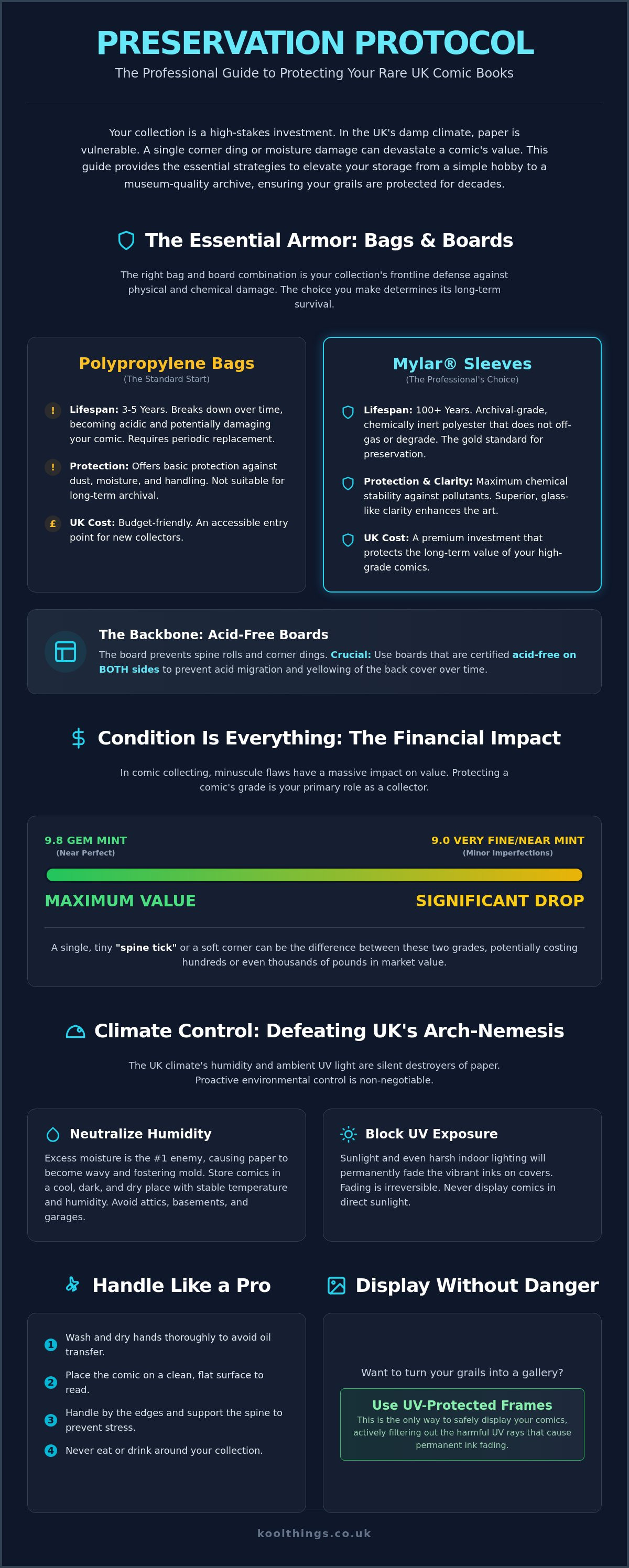
Condition is everything. In the world of high-stakes collecting, a single "spine tick"-a tiny stress line on the fold-can be the difference between a 9.8 Gem Mint and a 9.0 Very Fine/Near Mint. That small gap can represent hundreds, sometimes thousands, of pounds in market value. While professional grading services provide the final verdict, your job is to keep that book in the same state it left the printer. Acid migration is the chemical process where acids from low-quality paper or storage materials transfer to your comic, causing yellowing and brittle edges that destroy its market value. Understanding the history of comic book collecting shows us that the survivors are the ones that were tucked away with intention. Protection is the essential first step before you even think about sending a book off for a plastic slab.
Preserving the Art for Future Generations
Ink fading is the silent killer. Once UV rays or heat strip those vibrant reds and deep blues from a cover, they're gone forever. There is no undo button for sun damage. Beyond the money, there is a massive psychological win in owning a clean, organised comic library. It feels professional. It looks like a gallery. When you find a grail at a shop like Koolthings, your first thought should be how to keep it perfect. Whether you're bagging a 1960s classic or a hot new modern release, the standard remains the same. Treat every piece of rare comic books UK history with the same reverence you'd give a Golden Age masterpiece. You're not just a collector; you're a guardian of the art.
The Essential Armour: Choosing the Right Bags and Boards
You've secured your latest grail. Now, it's time to suit it up. Think of bags and boards as the frontline defense for your rare comic books UK collection. This isn't just about keeping the dust off. It's about chemical stability and structural integrity. If you're serious about curation, you need to understand the science behind the sleeves. The wrong choice could lead to wavy paper or "bag-burn" within a few years. It's time to choose your armor with intention.
Polypropylene vs. Mylar: The Ultimate Comparison
Most collectors start with Polypropylene. It's thin, flexible, and incredibly affordable. It looks great on a shelf, but it has a shelf life of its own. Over time, Polypropylene breaks down and can become acidic. If you go this route, plan to re-bag your books every three to five years. For your high-value assets, Mylar is the only logical choice. It's a heat-resistant, archival-grade polyester that doesn't off-gas. It's basically a time capsule for your paper. Following official comic book care guidelines ensures you're using materials that won't betray your collection a decade from now.
| Feature | Polypropylene | Mylar (Archival) |
|---|---|---|
| Clarity | High | Superior / Glass-like |
| Lifespan | 3-5 Years | 100+ Years |
| Protection | Basic moisture/dust | Maximum chemical stability |
| UK Cost | Budget-friendly | Premium investment |
The Role of the Backing Board
The board is the backbone of your protection strategy. Without it, your comic is prone to spine rolls and corner dings every time you move it. But not all boards are equal. You must use boards that are acid-free on both sides. Many cheaper boards are only "acid-neutralized" on one side, which can lead to yellowing on the back cover over time. Always remember the "shiny side" rule. The glossy, coated side of the board is the only surface that should touch your comic. This coating acts as an extra barrier against acid migration.
Sizing is your final hurdle. Don't try to save a few pence by squeezing a Silver Age book into a Current bag. It creates pressure on the staples and can cause permanent spine damage. Match your bags and boards to the era: Current (1990s-Present), Silver/Bronze (1950s-1980s), or Golden Age (Pre-1950s). Finally, ditch the standard Scotch tape. It's a disaster waiting to happen. One wrong move and that adhesive snags your cover art. Use low-tack painters tape or, better yet, switch to resealable bags for a sleek, tape-free finish. Once your storage is sorted, you can focus on the fun part: finding your next expertly curated grail to add to the archive.
Climate Control: Defeating the Arch-Nemesis of UK Paper
The UK weather is a relentless adversary for anyone holding a stack of paper treasures. It's damp. It's unpredictable. From a misty chill to an unexpected dry spell, the climate is famously varied across the nation. These rapid shifts are the "Invisible Enemy" of your rare comic books UK investment. Every time the humidity spikes, paper fibres swell. When it drops, they shrink. This cycle causes permanent waviness and weakens the structural integrity of your grails. If you want your collection to survive the next decade, you have to master the micro-climate of your home.
Sunlight is the other silent thief. UV radiation doesn't just warm your room; it literally bleaches the life out of your cover art. Those vibrant reds and deep blues that make a cover pop are incredibly sensitive to light exposure. Once that ink fades, the damage is irreversible. Your goal is a "Dark and Dry" environment. This isn't just about storage; it's about active preservation. Finding the right spot in your house is the first step toward total peace of mind.
Managing Humidity in the UK
British homes are notoriously humid. You need to aim for a steady 45% to 55% relative humidity. If you drop below 40%, the paper becomes dangerously brittle and prone to cracking. Above 60%, you're practically inviting foxing and mould to ruin your covers. Forget the attic. It's an oven in July and a freezer in January. Basements are equally risky due to rising damp and poor ventilation. Stick to an internal room with a consistent temperature. To keep things stable inside your containers, I recommend placing a rechargeable 40-gram silica gel canister in each storage box to soak up any lingering moisture.
The Power of the Proper Storage Box
Don't settle for generic cardboard if you're protecting high-value items. While standard longboxes are the industry staple, they offer zero protection against crushing or minor water ingress. Specialised heavy-duty plastic bins are a far superior choice for a curated library of rare comic books UK. They provide rigid structural support and are designed for perfect airflow. Whatever container you pick, remember the golden rule: vertical storage only.
- No Stacking: Stacking comics horizontally is a recipe for disaster. The weight creates "spine stress," which leads to unsightly indentations.
- Elevate: Always keep your boxes at least six inches off the floor. A simple shelving unit can save your life's work from a burst pipe or an accidental spill.
- Airflow: Leave a small gap between boxes and walls to prevent condensation build-up.
Elevation is key. A simple shelving unit or a basic pallet can save your life's work from a burst pipe or an accidental spill. Finally, respect the power of darkness. Keep your library away from direct sunlight. A cool, dark, and elevated spot is the only way to guarantee your collection stays in museum-quality condition for the long haul.
Handling and Auditing Like a Savvy Curator
Storage is only half the battle. Eventually, you'll want to admire your rare comic books UK or show off a new acquisition to a fellow collector. This is the danger zone. Most physical damage happens during the simple act of removing a book from its bag. A savvy curator treats every unbagging like a surgical procedure. One slip of the finger or a stray piece of tape can cause a permanent "tape pull" that strips the ink right off the cover. You need a protocol that eliminates risk and maintains that crisp, mint-condition aesthetic.
The "Active Reader" strategy is for those who refuse to let their collection stay locked away. You want to experience the story, not just the investment. To do this safely, never open the book 180 degrees. Keep the spine supported at a gentle 45 to 90-degree angle. This prevents the dreaded "spine crack" and keeps the staples from putting undue pressure on the centerfold. It's about respecting the medium while still enjoying the art. Handling your books with this level of intentionality ensures they remain museum-quality assets for decades.
The Five Steps of Safe Handling
Follow these steps every time you interact with your grails to ensure zero damage:
- Step 1: Thoroughly wash and dry your hands. Avoid all oils, soaps with heavy scents, and lotions. Even "clean" hands carry natural oils that leave permanent fingerprints on glossy covers.
- Step 2: Ensure a flat, clean surface for unbagging. Clear away coffee mugs, pens, or anything that could snag or spill.
- Step 3: Carefully remove the tape or open the resealable flap. If using tape, fold the sticky end back on itself so it can't accidentally grab the comic.
- Step 4: Slide the board and comic out together. Never pull the comic out by the top edge alone. By keeping them together, the board provides the structural support needed to prevent bending.
- Step 5: Lay the comic flat on your clean surface. If you're inspecting it, use a dedicated book stand or a soft microfibre cloth as a base.
Inventory and Collection Management
Tracking your collection is as rewarding as the hunt itself. Use a digital inventory app to log condition grades, purchase dates, and current market values. This data helps you prioritise which rare comic books UK need a Mylar upgrade or a fresh backing board first. Supplies don't last forever. Even the best Polypropylene bags eventually reach their limit and begin to cloud. Every six months, run a physical audit. Look for yellowing boards or bags that have lost their "snap." If a bag looks dull or feels sticky, it's time for an immediate swap. Ready to add another gem to your inventory? Check out the curated collection at Koolthings to find your next high-grade grail.
Displaying Your Grails Without the Damage
Exhibition. Inspiration. Elevation. You didn't hunt down the best rare comic books UK has to offer just to keep them buried in a dark box forever. You want to see them. You want your guests to see them. But displaying paper is a gamble. Even if your book is in a professional plastic slab, it isn't invincible. UV rays can penetrate those cases and bleach your cover art in months. To show off your grails safely, you need a strategy that balances visual impact with archival safety. It's about creating a gallery, not a graveyard.
For those who want to see the gold standard of item preservation and display in a traditional setting, you can visit Mary Collings Church Furnishings to discover how high-quality ecclesiastical items are crafted to last for generations.
Your display should reflect your personality and your eye for design. Integrate your comics into a wider lifestyle aesthetic. Frame a classic cover next to other cherished pop culture memorabilia or unique collectibles to create a multi-layered pop culture shrine. This mix of textures and mediums elevates your personal space. It turns a simple hobby into a design statement. By rotating your rare comic books UK finds alongside your other collectibles, you ensure your library remains the ultimate conversation starter without sacrificing its mint-condition future.
Choosing the Right Display Hardware
Hardware choice is your first line of defense. Standard acrylic frames might look sleek, but they often lack the UV-filtering properties needed for long-term display. Museum-grade glass is the gold standard. It filters out up to 99% of harmful UV rays while offering crystal-clear visibility. If you're mounting on a wall, ensure the brackets are secure and away from any heat sources like radiators. Shelf stands are a great alternative. They provide more stability and make it easier to swap issues in and out without tools. Lighting matters too. Ditch the natural sunlight. High-quality LED bulbs are much safer. They emit negligible UV radiation compared to traditional halogen or fluorescent tubes.
The Art of the Rotation
Master the art of the rotation. Even with UV protection, no comic should live on a wall indefinitely. Set a schedule to swap your displayed issues back into their dark, climate-controlled storage boxes every three months. This keeps your "Wall of Fame" fresh and exciting. It also gives the paper a much-needed break from light exposure. It's a curated approach that treats your collection like a living gallery rather than a static museum. A rotating display means you're constantly rediscovering the art you worked so hard to find. It keeps the excitement of the hunt alive while protecting the financial value of your assets.
Secure Your Legacy and Level Up Your Library
You've officially mastered the art of the long game. By choosing the right Mylar armor and neutralizing the damp British climate, you've transformed your storage into a professional-grade archive. Your rare comic books UK collection isn't just a hobby anymore; it's a museum-quality investment. You know the golden rules of handling. You've got the rotation strategy down. Now, you can look at your shelf with total peace of mind, knowing every spine and corner is locked in mint condition.
Ready to find your next centerpiece? We're a family-run independent shop obsessed with the best in pop culture. Our hand-picked inventory is curated for fans who value individuality and high-grade aesthetics. With fast UK-wide shipping, your next grail is only a click away. Explore the latest curated rare comic books UK at Koolthings and add something unique to your protected gallery. Keep hunting. Keep protecting. Your future self will thank you.
Frequently Asked Questions
How often should I change my comic book bags and boards?
You should replace standard Polypropylene bags and boards every three to five years. Over time, these materials break down and can become acidic, risking damage to your paper. If you've invested in archival Mylar, you won't need to swap them out nearly as often. Always check for cloudiness or a sticky texture. If the bag looks dull, it's time for a fresh suit to keep your grails looking sharp.
Can I store my comics in a plastic bin instead of a cardboard box?
Yes, heavy-duty plastic bins are a superior choice for protecting your collection. Unlike cardboard, plastic offers a rigid defense against crushing and provides a better seal against moisture ingress. Ensure you choose a container specifically designed for comic dimensions to prevent shifting. This is a smart move for anyone holding rare comic books UK assets in fluctuating home environments. It's about total structural security.
Is Mylar really worth the extra cost for modern rare comic books UK?
Mylar is absolutely worth the investment for any issue you consider a "grail" or a high-value modern key. While Polypropylene is fine for bulk, Mylar provides superior clarity and permanent chemical stability. It doesn't off-gas or yellow. If you've found rare comic books UK variants or a first appearance, spending a bit more on Mylar ensures its grade remains locked in for decades. It's the ultimate archival choice.
Should I use gloves when handling my comic book collection?
No, most curators actually recommend freshly washed and dried hands over gloves. Cotton gloves can snag on fragile paper edges and reduce your tactile sensitivity, making accidental tears more likely. Nitrile gloves are an option, but they can be slippery. Stick to the wash and dry rule to remove oils and lotions before you touch your most prized issues. It gives you the best grip and control during handling.
What is the best temperature for storing comic books in the UK?
Aim for a consistent temperature between 18°C and 20°C. Rapid fluctuations are the real danger, as they cause paper fibres to expand and contract. Avoid uninsulated attics or damp garages where temperatures swing wildly with the British seasons. A stable, internal room away from radiators is the perfect spot to keep your collection's structural integrity intact. To help maintain a stable, cool atmosphere in your hobby room during peak summer, you can discover FrostWave and its personal cooling capabilities. Consistency is your best friend when it comes to long-term paper health.
How do I stop my comics from smelling musty?
You stop that musty smell by strictly controlling humidity and ensuring proper airflow. That scent is usually a sign of mildew or active decay. Place a rechargeable silica gel canister inside your storage bins to soak up excess moisture. If a book already smells, you can place it in a sealed container with an open box of baking powder for a few days. Just make sure the powder never touches the paper art.
Can I store multiple comics in one bag to save space?
No, you should never double-up comics in a single bag. Storing two books together creates excessive pressure on the staples and can lead to spine roll or indentations. It also increases the risk of acid migration between the two issues. Every book deserves its own dedicated bag and board to ensure it stays flat, crisp, and protected from its neighbors. Don't cut corners on your storage strategy.
Does professional grading automatically protect my comic forever?
No, a professional grade provides a secure housing, but it isn't a magic shield. Even graded slabs are susceptible to UV fading and heat damage if stored incorrectly. You still need to keep your slabs in a dark, climate-controlled environment. Think of the slab as a premium display case that needs the same level of environmental respect as a bagged and boarded issue. Proper storage remains essential for every slab.